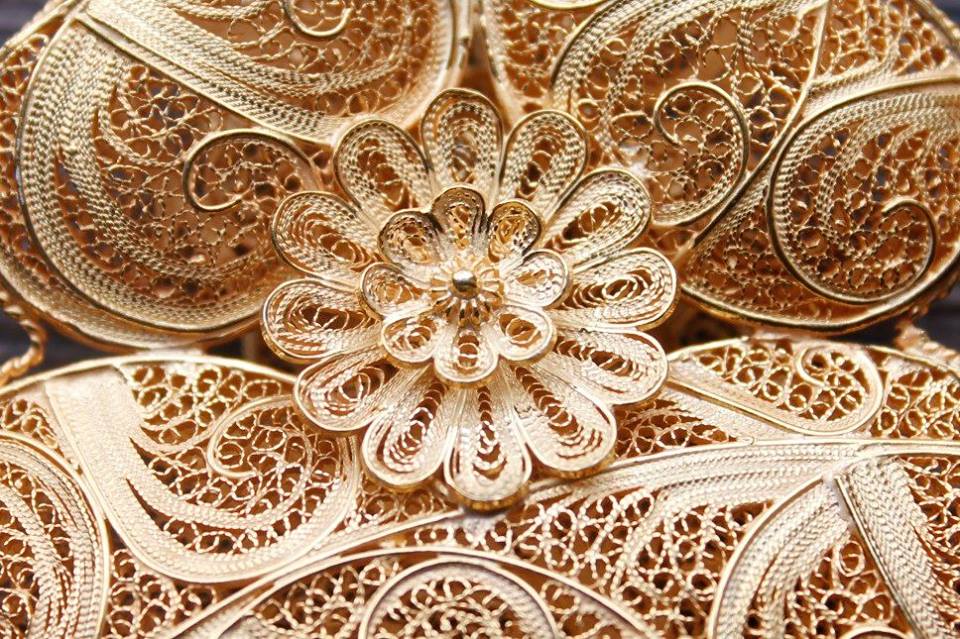
While gold has often been the universal symbol of wealth, in the historic city of Shkodra, silver has always held a much more intimate and culturally significant place in the hearts of the people. This preference is deeply rooted in the history of Northern Albania, where silver was not just a currency but a primary medium for artistic expression and social storytelling. In our Shkodra workshop at Margjelo, we continue this tradition, recognizing that silver possesses a unique structural flexibility that gold often lacks. It is this malleability that allows our artisans to draw the metal into threads as thin as a strand of hair, enabling the creation of the incredibly dense and airy patterns that define our local style. Historically, silver was the metal of the people and the master craftsmen of the bazaar, chosen for its brilliant luster and its ability to highlight the fine shadows and highlights of complex, hand-soldered textures.
The historical preference for silver in Shkodra is also linked to the traditional costumes of the highlands, where silver ornaments were used to signify status, protection, and regional identity. From the heavy silver belts (brez) to the delicate pins that adorned the Xhubleta, silver was prized for its "cool" elegance and its symbolic connection to the moon and purity. At Margjelo, we believe that silver carries a humbler, more grounded soul than gold; it is a metal that invites closer inspection and rewards the viewer with a sense of the artisan’s effort. While gold can sometimes overwhelm a design with its color, silver acts as a canvas for the technique itself, allowing the geometric precision of our loom-inspired patterns and the delicate curves of our floral motifs to stand at the forefront of the art.
Today, the choice of silver over gold remains a hallmark of Shkodran identity and a cornerstone of the Margjelo mission. By focusing on high-quality sterling silver, we ensure that our jewelry and decorative items remain accessible while maintaining a level of craftsmanship that rivaled the royal courts of the past. Silver is a living metal; it develops a unique character over time, reflecting the life and journey of its wearer. For those who visit our workshop or browse our collection, choosing a silver piece is an acknowledgment of a specific Balkan legacy—one where the value of an object is measured not just by the market price of the ore, but by the thousands of years of history and the hundreds of hours of manual labor woven into every silver thread.